

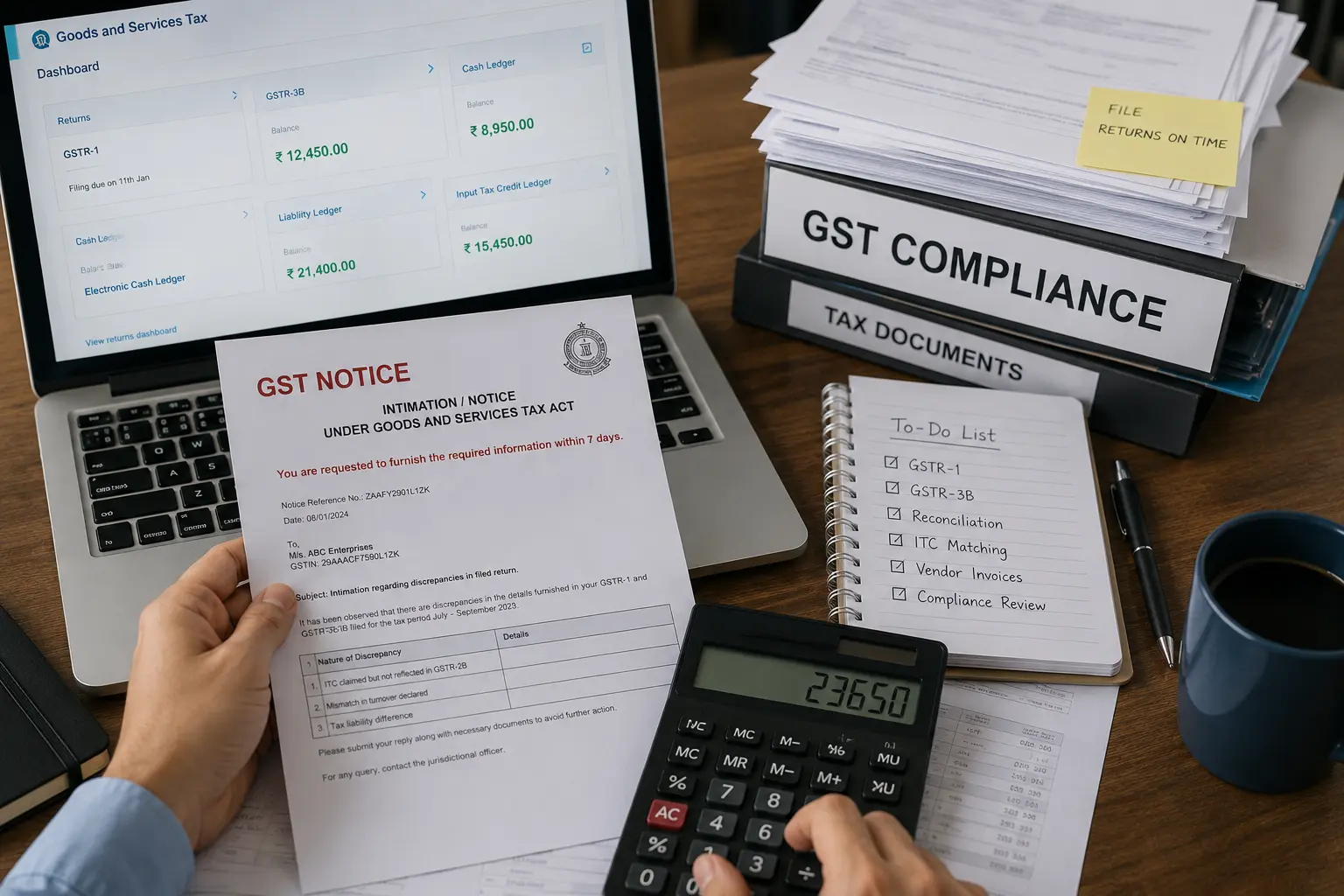
Most GST notices don’t arrive because a business intentionally did something wrong.
They arrive because something small was overlooked.
A mismatch.
A missed filing.
An incorrect claim.
A simple error that quietly sits in the system until it gets flagged.
For many small businesses, GST becomes a routine task.
Something that gets completed every month and forgotten.
But GST compliance isn’t just about filing returns.
It’s about ensuring every number, transaction and report aligns correctly.
Because when it doesn’t, notices often follow.
Why GST Notices Are Becoming More Common
GST systems are far more automated today than they were a few years ago.
Government systems can now identify mismatches and anomalies much faster.
That means errors that once went unnoticed can now trigger alerts automatically.
The challenge isn’t always fraud.
The challenge is accuracy.
As businesses grow, transactions increase.
And with more transactions comes a higher chance of mistakes.
Mistake #1: Mismatch Between GST Returns
One of the most common triggers is a mismatch between returns.
For example:
Sales reported in one return may not match figures reported elsewhere.
Purchase data may differ from supplier records.
Input tax credit claims may not align with available data.
Even small inconsistencies can raise questions.
The larger the mismatch, the greater the risk of scrutiny.
Mistake #2: Missing Filing Deadlines
Many businesses underestimate the impact of late filings.
A missed deadline doesn’t just create penalties.
It can also create compliance flags.
Repeated delays often signal weak compliance systems.
And over time, those patterns become visible.
Businesses that consistently file on time generally face fewer compliance issues.
Mistake #3: Incorrect Input Tax Credit Claims
Input Tax Credit (ITC) is one of the most valuable GST benefits available to businesses.
It’s also one of the most common areas where mistakes occur.
Businesses sometimes claim credits:
- Without proper documentation
- Before eligibility is confirmed
- Against incorrect invoices
- For expenses that don’t qualify
These issues can quickly attract attention during reviews or audits.
Mistake #4: Poor Record Keeping
GST compliance doesn’t end after filing.
Businesses must maintain accurate supporting records.
This includes:
- Tax invoices
- Purchase records
- Vendor documentation
- Payment records
- Reconciliation reports
When records are incomplete, responding to notices becomes significantly more difficult.
Strong documentation often resolves issues before they become larger problems.
Mistake #5: Ignoring Reconciliation
Many businesses focus heavily on filing.
Few spend enough time reconciling.
Reconciliation helps ensure that:
- Books match returns
- Vendor records align correctly
- Tax liabilities are accurate
- Input tax credits are valid
Without reconciliation, errors can remain hidden for months.
And when discovered later, fixing them becomes much more complicated.
The Real Cost of GST Notices
Most business owners worry about penalties.
But penalties are often not the biggest problem.
The real cost is disruption.
A GST notice can create:
- Administrative stress
- Time-consuming responses
- Additional professional fees
- Delays in business operations
- Leadership distraction
Instead of focusing on customers and growth, teams suddenly shift their attention to compliance issues.
How Businesses Reduce Risk
The businesses that experience fewer GST problems usually follow a simple approach.
They don’t wait until filing day.
They build systems.
They reconcile regularly.
They maintain documentation.
They review transactions before issues appear.
And most importantly, they treat GST as an ongoing process rather than a monthly task.
Prevention Is Always Easier Than Correction
Fixing a GST issue after receiving a notice is possible.
Preventing the issue in the first place is far easier.
Strong GST compliance creates confidence.
You know your filings are accurate.
You know your records are complete.
You know your business is operating correctly.
That peace of mind is often more valuable than businesses realize.
Final Thoughts
Most GST notices begin with small mistakes.
Mistakes that seem harmless at the time.
But when left unchecked, those mistakes can create unnecessary stress, penalties and business disruption.
The goal isn’t simply filing GST returns.
The goal is building a compliance process that keeps your business protected as it grows.
Need Help With GST Compliance?
We help businesses manage GST registrations, filings, reconciliations, notices and ongoing compliance support.
So you can focus on running your business while staying compliant with confidence.